

Last Updated on June 4, 2026 by The Official Game Rules Team
Blackjack is one of the few casino games where skill can genuinely influence outcomes. Unlike slots or roulette, where results are purely random, blackjack allows players to make decisions that affect their long-term results.
Basic strategy already reduces the house edge significantly. But once players move beyond the basics, they enter the world of advanced blackjack strategies, where mathematics, probability, and discipline start to matter far more than luck alone.
These strategies don’t guarantee short-term wins, but they can shift long-term expectations, reduce the house edge, and in some cases even create a statistical advantage over the casino.
This guide breaks down card counting systems, bet sizing adjustments, deck penetration awareness, deviations from basic strategy charts, risk-based bankroll control, and other techniques that separate casual players from serious advantage players.
Understanding Key Blackjack Terms First
Before diving into advanced blackjack strategy, it’s important to understand the language of the game. These terms appear constantly in strategy discussions:
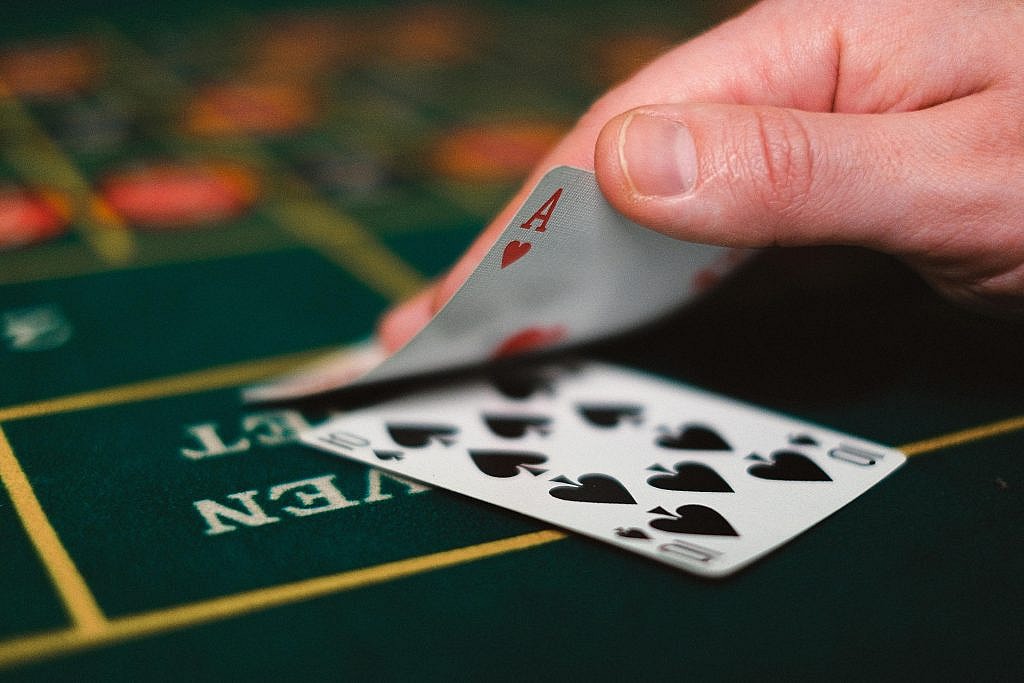
Blackjack is a natural 21 made from an Ace and a 10-value card. A bust happens when your total exceeds 21. A hit means taking another card, while a stand means staying with your current total.
Doubling down allows you to double your bet in exchange for exactly one additional card. Splitting lets you separate matching cards into two hands. Surrendering means giving up your hand early and recovering part of your bet. A push is a tie between player and dealer.
Hands are also categorized as soft or hard. A soft hand contains an Ace counted as 11, while a hard hand either has no Ace or the Ace counts as 1.
These definitions matter because advanced strategy depends on how these situations interact with probability and remaining cards in the deck.
What Makes a Strategy “Advanced” in Blackjack?
Basic blackjack strategy is fixed. It tells you exactly when to hit, stand, double, or split based only on your hand and the dealer’s visible card.
Advanced blackjack strategy goes further. They introduce dynamic decision-making based on additional factors like deck composition, betting patterns, and game conditions. Instead of treating every hand independently, advanced players ask a deeper question:
“What is the current state of the deck, and how does that change my odds?”
This shift is what separates basic play from advantage-level thinking.
Advanced strategies often include:
- Card counting systems
- Bet sizing adjustments
- Deck penetration awareness
- Deviations from basic strategy charts
- Risk-based bankroll control
These methods aim to reduce or even reverse the casino’s mathematical edge.
The House Edge and Why It Matters
In a standard game of blackjack, the house edge is typically around 2 percent when playing without strategy. That means, statistically, for every $100 wagered, a player may lose about $2 over time.
Basic strategy reduces this edge to around 0.5 percent.
Advanced blackjack strategies push this further by introducing situational decision-making and card counting. In some conditions, skilled players can shift the edge slightly in their favor, meaning expected returns may become positive over the long run.
However, this advantage is small, and variance still plays a major role. Even strong players can experience long losing streaks despite having a mathematical edge.
Card Counting: The Core of Advanced Blackjack Strategies
Card counting is one of the most important advanced blackjack strategy, but it’s often misunderstood. It is not about memorizing every card that has been played. Instead, it is about tracking the balance of high and low cards remaining in the deck.
The reason this works is because blackjack outcomes are not static. The composition of the remaining deck directly affects probabilities. When more high cards (10s and Aces) remain, the player’s chances of hitting strong hands like blackjack increase. When more low cards remain, the dealer benefits more because they are less likely to bust.
How the system works in simple terms
Most card counting systems assign values to cards as they are seen:
- Low cards (2–6) = +1
- Neutral cards (7–9) = 0
- High cards (10, J, Q, K, A) = -1
As cards are dealt, players keep a running count. A positive count means more low cards have been played, leaving a higher concentration of valuable high cards in the deck. A negative count suggests the opposite.
However, in multi-deck games (which are very common in casinos), players must adjust this running count based on how many decks are left. This adjusted number is called the true count, and it is what determines real betting decisions.
Why it creates an advantage
Card counting does not predict specific cards. Instead, it shifts probability awareness.
When the true count is high:
- Blackjack becomes more likely
- Dealer bust probability increases
- Doubling down becomes more profitable
- Larger bets become statistically justified
When the count is low or negative:
- Players reduce bet sizes
- Some hands become less profitable to play aggressively
Over time, this selective betting is what creates a potential edge.
Important reality check
Card counting does not guarantee wins in the short term. Even with a positive edge, variance can still produce losing sessions.
It also does not involve cheating or hidden devices. It is purely mental tracking of visible information. Because of this, it is technically legal in many jurisdictions, but casinos are allowed to refuse service or remove players they suspect of using it.
Common systems
The Hi-Lo system is the most widely used because it is simple and effective. More advanced systems (like Omega II or Wong Halves) assign more detailed values to cards, but they are harder to learn and use in real time.
Card counting is best understood as a way to measure when the deck is favorable. It doesn’t change the rules of blackjack, but it changes how a skilled player reacts to changing conditions—especially when it comes to betting size and risk decisions.
Hi-Lo System
The Hi-Lo system is the most common and beginner-friendly method.
- 2–6 = +1
- 7–9 = 0
- 10–Ace = -1
Players keep a running count and convert it into a true count in multi-deck games. A higher positive count means more high cards remain, which improves player odds.
It’s popular because it’s simple, fast, and effective enough for real casino use.
Omega II System
The Omega II system is more advanced and uses multi-level values:
- Low cards (2,3,7) = +1
- 4,5,6 = +2
- 9 = -1
- 10-value cards = -2
- Ace = 0
It provides more accuracy than Hi-Lo but is harder to use in real time due to increased mental complexity.
Wong Halves System
The Wong Halves system is one of the most precise but also most difficult methods.
It uses fractional values:
- Some cards = +0.5 or +1.5
- Others = -0.5 or -1
This gives very accurate deck tracking but requires fast mental math and strong concentration.
Summary
- Hi-Lo: easiest, most practical
- Omega II: more precise, harder
- Wong Halves: most accurate, most complex
Bet Sizing and the Concept of Bet Spread
One of the most important advanced blackjack strategy is bet sizing. Casual players tend to bet randomly or emotionally. Advantage players do the opposite. They adjust their bets based on mathematical expectation.
This creates what is called a bet spread, which is the difference between your smallest and largest bets. A larger spread increases potential profit but also increases the risk of detection and variance swings. A smaller spread is safer but reduces long-term edge.
Professional players often balance this carefully using structured bankroll management techniques.
Insurance Bets: When They Actually Make Sense
Basic strategy advises against taking insurance because it has a high house edge. However, in advanced blackjack strategy, insurance can become profitable under specific conditions.
If the true count is high enough, meaning there is a high concentration of 10-value cards remaining, insurance can shift from a negative expectation bet to a positive one.
In simple terms, insurance is only worth considering when the deck is heavily weighted toward high cards, typically at a true count of +3 or higher.
Outside of those conditions, it remains a mathematically poor decision.
Advanced Strategy and Playing Deviations
One of the most powerful aspects of advanced blackjack strategy is deviation from basic strategy. Basic strategy is fixed, but advanced players adjust decisions based on deck conditions.
For example, a player might normally stand on a hard 16 against a dealer 10. However, if the count is strongly positive, hitting or standing may change depending on expected card distribution. Similarly, doubling down decisions can shift based on whether high cards are more likely to appear.
These deviations are subtle but important. Over time, they contribute significantly to reducing house edge.
Bankroll Management and Risk Control
Even the best strategy fails without proper bankroll management. Advanced blackjack players treat their bankroll as a survival system rather than a single session budget.
A common rule is maintaining a bankroll large enough to withstand variance, often 50 to 100 times the maximum planned bet. Some players use mathematical models like the Kelly Criterion to determine optimal bet sizing based on edge and probability.
The Kelly Criterion is a mathematical model used to determine the optimal bet size based on your estimated edge and the odds of winning. In blackjack, it’s mainly used by advanced players who believe they have a measurable advantage, such as through card counting.
The idea is simple: instead of betting a fixed amount, you scale your bet up or down depending on how strong your edge is in a given situation. If your advantage is larger, the model suggests betting more. If your edge is small or uncertain, it recommends betting less or even sitting out.
The basic formula is:
Bet size = edge ÷ odds
In practice, most blackjack players use a “fractional Kelly” approach (like half-Kelly) because full Kelly can lead to large swings in bankroll during variance-heavy sessions. While it doesn’t change the house edge itself, the Kelly Criterion helps manage risk, reduce the chance of ruin, and optimize long-term growth when an advantage does exist.
The goal is not just to win, but to avoid going broke during natural downswings.
Splitting and Doubling in Advanced Play
Splitting and doubling are core components of blackjack, but advanced strategies refine when and how they are used.
While basic strategy provides fixed rules, advanced play adjusts these decisions based on deck composition.
For example, splitting tens is usually avoided in basic play, but in very high count situations it can become profitable. Similarly, doubling down opportunities may expand when the deck is rich in high cards.
These adjustments are small individually, but significant over time.
Progressive Betting Systems (Use with Caution)
Some players combine blackjack strategy with betting systems like Martingale, Paroli, or 1-3-2-6 systems. These systems adjust bet size based on previous outcomes rather than card composition.
- The Martingale system is a negative progression method where you double your bet after every loss. The idea is that a single win recovers all previous losses plus a small profit. The downside is that long losing streaks can quickly become expensive and hit table limits.
- The Paroli system works in the opposite way. It is a positive progression system where you increase your bet after wins rather than losses. The goal is to ride winning streaks while keeping losses limited during downswings.
- The 1-3-2-6 system is a structured positive progression strategy. You increase bets in a set sequence after wins (1 unit, then 3, then 2, then 6), and reset after a loss or completion of the cycle. It is designed to lock in profits during short winning runs while limiting exposure during losses.
While they can create short-term profit streaks, they do not change the underlying house edge and can lead to large losses during variance swings. Advanced players generally prioritize card-based advantage over pure progression systems, though some use hybrids carefully.
Psychological Discipline in Advanced Blackjack
One of the most overlooked parts of advanced blackjack strategy is psychology.
Even with perfect strategy, emotional decisions can destroy long-term results.
Common issues include:
- Chasing losses after bad streaks
- Increasing bets emotionally instead of mathematically
- Losing focus during long sessions
- Deviating from strategy under pressure
Advanced players treat blackjack as a long-term statistical process rather than a series of individual wins and losses.
Staying disciplined is often more important than learning new techniques.
Why Advanced Blackjack Strategies Work
The effectiveness of advanced blackjack strategy comes down to one idea: blackjack is not purely random. The composition of the deck changes over time, and that change affects probability. By tracking and reacting to those changes, skilled players can shift outcomes slightly in their favor.
The advantage is small, often just a fraction of a percent, but over thousands of hands, that small edge becomes meaningful.
Final Thoughts
Advanced blackjack strategy is not about guaranteed wins. They are about improving decision quality, reducing mathematical disadvantage, and managing risk intelligently.
The most successful players combine card counting, disciplined bankroll management, strategic deviations, and emotional control.
While casinos still maintain structural advantages, skilled players who understand probability and remain consistent can significantly improve their long-term results.
Related Articles
 Beginners Guide to Blackjack: How to Play, Rules Explained Simply, Strategy Tips, and Common Mistakes
 Casino Rules for Beginners: What You Need to Know Before Playing
 How Much Money Casinos Make Every Day: The Massive Business Behind Gambling
 Is Online Blackjack Rigged? The Truth Every Player Should Know
 How Casinos Catch Card Counters: What Really Happens Behind the Scenes
 Inside the Biggest Casino Heists Ever Attempted