

Blackjack has remained one of the most popular casino games for generations because it is one of the few casino games where skill can significantly influence results. Unlike roulette, slots, and many other games of pure chance, blackjack rewards players who understand probability, card values, and basic strategy.
But as online gambling has grown, a common question has emerged: do online blackjack and real blackjack offer the same odds?
The answer is more complicated than many players realize.
At first glance, the rules appear nearly identical. You receive cards, the dealer receives cards, and the goal is to beat the dealer without going over 21. However, differences in deck size, payout structure, game speed, and casino rules can create noticeable differences in blackjack odds.
For some players, online blackjack actually offers better odds than many casino floors (read, Best Blackjack Sites for Beginners With Amazing Bonus Offers). For others, a carefully chosen table in a land-based casino may provide the best odds available anywhere.
Let’s examine how the numbers compare.
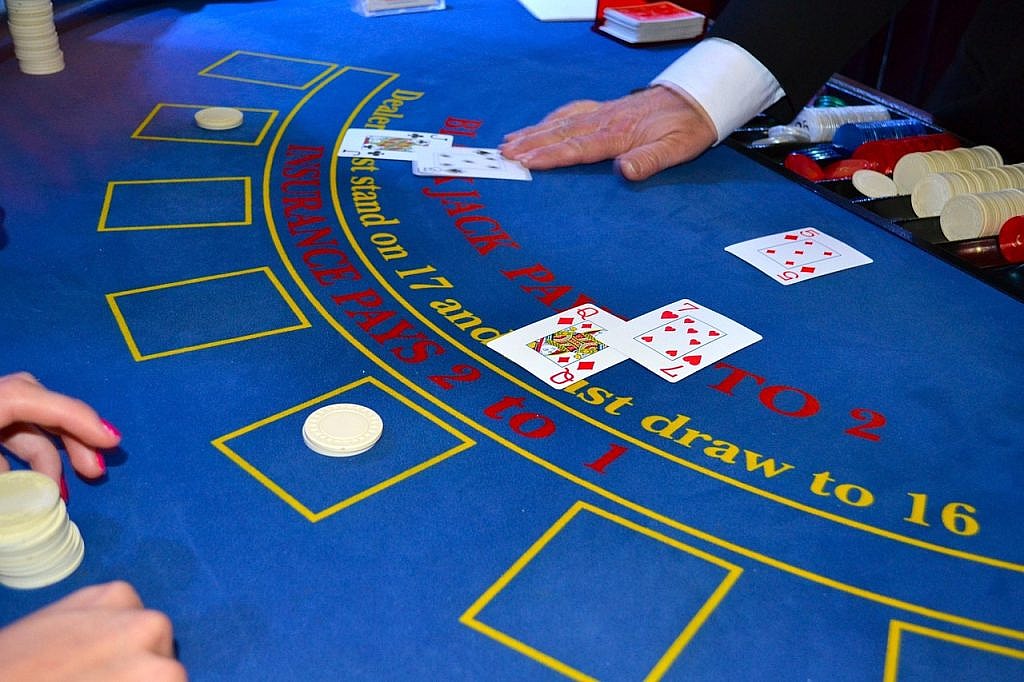
Understanding Blackjack Odds
Before comparing online and real blackjack, it’s important to understand what blackjack odds actually mean.
Every hand played has a mathematical expectation. Casinos maintain a built-in advantage known as the house edge, but blackjack has one of the smallest house advantages among all table games.
With perfect basic strategy, the house edge can fall below 0.5% in many blackjack games.
To put that into perspective:
- Roulette typically carries a house edge of 2.7% to 5.26%
- Many slot machines operate with RTP percentages between 90% and 96%
- Some side bet options exceed 10% house edge
- Blackjack can fall below 0.5% under favorable conditions
That difference becomes enormous in the long run.
A player wagering $10,000 through blackjack with a 0.5% house edge theoretically loses about $50 over time. The same amount wagered through roulette could cost several hundred dollars.
Why Deck Size Matters
One of the biggest factors affecting blackjack odds is the number of decks used.
Traditional blackjack was originally played with a single deck. Modern casinos often use six or eight decks.
The reason is simple: fewer decks favor players.
Single deck games slightly increase the probability of receiving a natural blackjack because there is a greater concentration of valuable cards remaining after each deal.
For example:
- Single deck blackjack generally offers better odds than six-deck games.
- Single deck games make card counting easier.
- Fewer decks reduce the casino’s advantage.
Unfortunately, truly favorable single deck games have become increasingly rare in physical casinos.
Many casinos advertise single deck blackjack but compensate by offering worse blackjack payouts or restricting player options such as doubling or splitting.
Online Casinos Often Offer Better Rules
This surprises many gamblers.
People often assume real casinos provide the most authentic experience and therefore the best odds.
In reality, many online blackjack games offer more favorable rules.
Online operators don’t have the same overhead expenses as a major casino resort. Because of this, they can sometimes offer:
- Better blackjack payouts
- Lower minimum wagers
- More favorable surrender rules
- More player-friendly split rules
- Greater game variety
Some online blackjack tables still offer the traditional 3:2 payout for a natural blackjack, while many physical casinos have shifted toward a 6:5 payout structure.
That difference sounds small but has a major impact.
The 3:2 vs 6:5 Payout Debate
This single rule change may be the most important factor affecting blackjack odds today.
Traditional blackjack pays 3:2 on a natural blackjack.
If your original bet is $100:
- A 3:2 payout returns $150 in profit.
- A 6:5 payout returns only $120.
That means players lose $30 every time they hit blackjack.
Because blackjacks occur roughly once every 21 hands, those losses add up surprisingly quickly.
Gaming analysts estimate that switching from 3:2 to 6:5 increases the house edge by approximately 1.4%. In other words, a great blackjack game can become worse than some roulette wheels simply because of the payout structure.
This is why experienced players often consider payout rules before anything else.
Live Dealer Games vs Physical Blackjack Tables
Live dealer blackjack has become one of the fastest-growing categories in online gambling.
These games use real dealers, physical cards, and real-time video streams.
From an odds perspective, live dealer blackjack often mirrors traditional blackjack very closely.
Many live dealer tables use:
- Six or eight decks
- Standard payout rules
- Physical shuffling procedures
- Dealer stands on soft 17 or hits soft 17 depending on the variant
The primary difference is speed.
Online players can often play far more hands per hour than players sitting at blackjack tables inside a casino. That increased volume means variance appears faster.
You may experience winning streaks and losing streaks much more quickly than in a physical casino.
Dealer Bust Odds Remain Surprisingly Consistent
Many players believe dealers have an unfair advantage.
The statistics tell a different story.
Dealer bust odds depend almost entirely on the dealer upcard.
When the dealer shows:
- 2: Bust rate around 35%
- 3: Around 37%
- 4: Around 40%
- 5: Around 42%
- 6: Around 42%
- Ace: Around 17%
These numbers remain largely consistent across online and real blackjack.
This is why basic strategy frequently recommends standing with a mediocre hand total against dealer 4, 5, or 6.
The dealer is already in a weak position. Letting the dealer make mistakes becomes the mathematically correct play.
The Hidden Cost of Side Bets
Many online and real casinos advertise exciting side bet options.
Popular examples include:
- Perfect Pairs
- 21+3
- Lucky Lucky
- Insurance
These bets create additional excitement but often carry a much larger house edge than the main game.
Take Perfect Pairs as an example. Depending on the pay table, the house edge often ranges between 2% and 11%. The 21+3 side bet, which combines poker-style outcomes such as a straight flush, often carries house edges exceeding 3%.
Compare that to a blackjack game played with perfect basic strategy and the difference becomes obvious. The side bet is usually where casinos make much of their profit.
Online Blackjack Offers More Variants
One advantage of online casinos is sheer variety.
A single casino might offer:
- Classic blackjack
- European blackjack
- Atlantic City blackjack
- Vegas Strip blackjack
- Double Exposure
- Spanish 21
- Single deck blackjack
- Multi-hand blackjack
Many physical casinos simply cannot dedicate enough space to support so many blackjack games. This allows players to shop for better rules and lower house edges.
Not every variant is favorable, however. Some offer bonus features that sound attractive but actually create higher risk and worse odds.
Always review the rules before playing.
Real Casinos Have One Unique Advantage
There is one area where physical casinos can sometimes outperform online blackjack.
Table selection.
Skilled players can physically walk through a casino and compare dozens of blackjack tables.
They may find:
- Better payouts
- Lower minimum wagers
- Dealer stands rules
- Single deck games
- Favorable surrender options
Professional blackjack players have long used this approach to find the best odds available.
In some famous Las Vegas casinos, advantage players would spend more time scouting tables than actually gambling.
Card Counting and Online Blackjack
One major difference involves card counting.
In physical casinos, card counting remains possible. Casinos dislike it, but it is generally legal because players use only information visible at the table.
Online blackjack presents a different challenge because many RNG blackjack games shuffle after every hand. Since the deck effectively resets each round, counting provides no advantage.
Live dealer blackjack offers better opportunities because cards remain in play longer, but frequent shuffling and limited deck penetration reduce effectiveness.
This makes real blackjack generally superior for serious advantage players.
How Often Does Blackjack Actually Occur?
Many players underestimate how often a natural blackjack appears.
In a standard game:
- Probability of blackjack is approximately 4.8%
- Roughly one blackjack every 21 hands
That means during a 100-hand session, players should expect around four or five natural blackjack hands.
This frequency is exactly why blackjack payouts matter so much.
Even small changes dramatically affect long-term results.
Player Bust Odds Are Higher Than Most Think
While players often focus on dealer bust odds, player bust odds are actually much higher.
When players hit aggressively:
- Hands totaling 12 bust roughly 31% of the time
- Hands totaling 13 bust roughly 39% of the time
- Hands totaling 14 bust roughly 56% of the time
- Hands totaling 16 bust over 60% of the time
This is why perfect basic strategy often feels uncomfortable.
Mathematically correct decisions sometimes require taking risks that seem counterintuitive.
The Role of Splitting and Surrender
Two rules dramatically affect blackjack odds:
Split
Being allowed to split pairs creates additional opportunities to maximize strong situations.
A pair of aces is one of the strongest examples.
Instead of starting with a weak hand total of 12, splitting allows two separate hands with excellent potential.
Surrender
Surrender lets players forfeit half their original bet instead of playing a highly unfavorable hand.
Although many beginners ignore it, surrender can reduce the house edge significantly over thousands of hands.
Unfortunately, many casinos have removed surrender entirely.
Which Version Has Better Odds?
The answer depends on the specific game.
Online blackjack often provides better odds when:
- Traditional 3:2 payouts are available
- Favorable surrender rules exist
- Low house-edge variants are offered
- Players can easily compare games
Real blackjack often provides better odds when:
- High-quality single deck games are available
- Favorable table rules exist
- Card counting opportunities are present
- Dealers use deep deck penetration
Neither format automatically wins.
The rules matter far more than the location.
A Surprising Real-World Example
Several Las Vegas casinos switched from 3:2 to 6:5 blackjack over the past two decades.
At the same time, many online operators continued offering traditional payouts. As a result, some online blackjack games now provide better mathematical returns than blackjack tables on the Las Vegas Strip. Many casual players never notice this because they focus on atmosphere rather than odds.
Professional players pay attention to every rule because tiny differences become enormous in the long term.
Final Verdict
When comparing online blackjack vs real blackjack odds, there is no universal winner.
Online blackjack offers convenience, game variety, lower minimum wagers, and often surprisingly favorable rules. Live dealer games provide an experience remarkably close to traditional blackjack while maintaining competitive odds.
Real blackjack still holds advantages for players seeking single deck games, favorable table conditions, and the possibility of advantage play techniques such as card counting.
The most important lesson is that rules matter more than location.
A well-designed online blackjack game with traditional blackjack payouts can easily provide better odds than a poorly configured casino table. Likewise, an excellent single deck game inside a casino resort can outperform many online options.
Instead of asking whether online or real blackjack is better, smart players ask a different question: Which game offers the lowest house edge, the best payouts, and the most favorable rules? That answer will almost always determine where the best odds truly exist.
Related Articles
 Casino Rules for Beginners: What You Need to Know Before Playing
 Advanced Blackjack Strategies: How Skilled Players Gain an Edge
 Best Blackjack Sites for Beginners With Amazing Bonus Offers in 2026
 Beginners Guide to Blackjack: How to Play, Rules Explained Simply, Strategy Tips, and Common Mistakes
 How to Play Blackjack Online for Beginners: A Complete Guide
 The 10 Games AI Thinks You Should Try Next