Whether you’re a weekend player racking balls at your local bar or someone who’s just discovered a love for cue sports, there comes a time when you want to step up your pool game. The good news? You don’t need professional coaching or expensive equipment to play noticeably better. With just a handful of practical tips and smart habits, you can go from casual to confident and start winning more games.
Here’s how to level up your pool skills with a solid foundation, one step at a time.
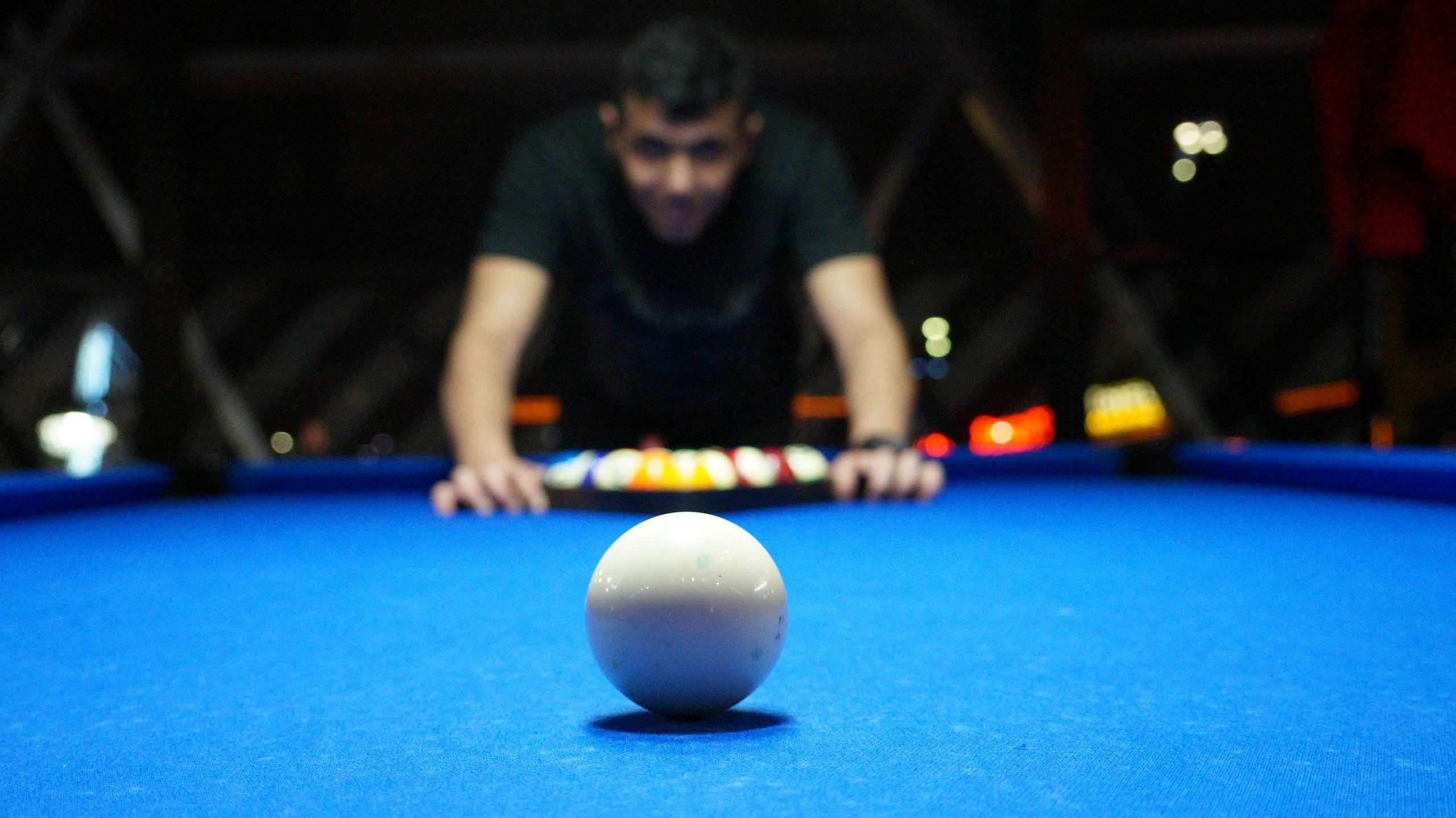
How to Get Better at Pool
1. Focus on Your Stance and Grip
If you’re like most casual players, your stance probably changes every game. A solid stance builds consistency.
- Feet shoulder-width apart for stability
- Line your dominant foot forward, roughly pointing toward the shot
- Keep your weight evenly balanced, not too far forward or back
- Light grip: your back hand should hold the cue like a pen, not a hammer
Most missed shots begin with a poor stance or rushed stroke. Train your body to set up the same way every time.
2. Keep Your Cue Level and Your Follow-Through Straight
Many casual players unknowingly drop or lift the cue tip during their shot. This can cause spin, misalignment, and missed balls.
- Keep your cue parallel to the table during the shot
- Finish with a smooth, controlled follow-through—your cue tip should end where your shot was aimed
- Avoid jerky movements or sudden stops
It might feel awkward at first, but even a little consistency in cue motion pays off quickly.
3. Master the Basics of Aim: Ghost Ball and Contact Point
Instead of just “eyeballing” your shots, start thinking about how cue ball and object ball interact.
- Ghost Ball Method: Imagine a phantom cue ball sitting where contact needs to happen to sink the object ball
- Align your real cue ball to this position
- Visualize the angle before stepping into the shot
This simple method helps eliminate guesswork and improves accuracy, especially on straight or cut shots.
4. Learn to Control the Cue Ball (Even Just a Little)
You don’t need to master English or trick shots. Start by focusing on cue ball control:
- Try to stop the cue ball on contact (a “stop shot”)
- Learn basic follow (cue ball rolls forward) and draw (cue ball comes back)
- Use center-ball hits to stay consistent
Being able to position the cue ball just 6–12 inches better can make the next shot dramatically easier.
5. Take More Time to Plan Your Next Shot
One of the fastest ways to improve is to simply pause and plan before every shot.
- Ask: “Where will the cue ball go after I make this shot?”
- Think one shot ahead: “What do I want to be left with next?”
- Avoid hitting the ball hard unless it’s necessary
You’ll begin to notice patterns, clusters, and position possibilities that casual players completely miss.
6. Practice with Purpose, Not Just Random Shots
Instead of playing race-to-8 over and over, dedicate 15 minutes to targeted drills:
- Line up straight-in shots and repeat them from different distances
- Try pocketing the same shot with stop, follow, and draw
- Practice hitting specific cue ball targets (like bringing it back 12 inches)
Even 20 minutes of solo focused practice can improve your consistency more than hours of random games.
7. Learn to Break Better
The break shot sets the tone for the whole game. Here’s how to improve yours:
- Solid stance and wide base
- Cue ball slightly off-center (around 1 ball width left or right of the head spot)
- Focus on controlled power, not just speed
- Hit the head ball square with a level cue
Watch where balls go and adjust your aim or power on future breaks.
8. Watch and Learn from Better Players
Whether it’s YouTube pros, local league players, or someone at your bar who just never misses—watching better players teaches you more than you’d expect.
- Observe their stance, pacing, and how they plan each shot
- Ask questions—they’ll often give tips if you’re respectful
- Look at how they leave the cue ball, not just how they make shots
Watching pool like a student builds your mental game and pattern recognition.
9. Play Different Opponents
It’s easy to fall into a comfort zone playing with the same friends. To grow:
- Challenge new opponents, especially those slightly better than you
- Join a local pool league or amateur tournament
- Switch up game types (8-ball, 9-ball, straight pool) to broaden your skills
Losing to better players can be frustrating—but it’s also the fastest way to learn.
10. Be Patient—and Don’t Try to Win With Trick Shots
A lot of casual players fall into the trap of trying high-risk, low-reward shots to look flashy. If you just focus on solid fundamentals and smart decisions, you’ll win more games—even if your shots don’t look fancy.
Improvement in pool is a slow climb. You don’t need to be a shark to get better. You just need consistency, a bit of strategy, and the willingness to think one shot ahead.
Final Thoughts
We hope you enjoyed this article on How to Get Better at Pool! The difference between a casual bar player and a solid recreational player comes down to mindset and intention. By mastering a few basic mechanics, thinking more strategically, and practicing with a little purpose, you’ll start to surprise yourself—and your friends—very quickly.
So next time you walk up to the table, don’t just shoot. Take your time, think it through, and play the kind of pool that builds confidence—one shot at a time.