

Last Updated on January 20, 2026 by The Official Game Rules Team
Bullshit, also known as Cheat or BS, is a fast-paced and deceptive card game where players try to get rid of their cards by playing them face down and calling out their rank. This page provides a clear breakdown of the rules, guiding you through the art of bluffing, calling bluffs, and managing your hand to avoid being caught.

This post contains affiliate links. For more information, see our disclosures here.
How to Play Bullshit (BS)
What is the Bullshit Card Game?
The Bullshit card game, also known as Cheat, I Doubt It, BS, or Liar, is a fast-paced bluffing game where players try to discard all their cards. Each turn, players declare the rank of the cards they are playing—whether or not it’s true. Other players can challenge a move by calling “Bullshit” if they believe the player is lying.
Objective of the Game
The goal of the Bullshit card game is to be the first player to get rid of all your cards. Players take turns laying cards face-down in sequence, and they may lie about which cards they’re playing. If someone calls “Bullshit” and catches a lie, the liar takes the pile. If the call is wrong, the challenger takes it.
Number of Players
- Minimum: 2 players
- Maximum: 10 players
- Best with: 3 to 6 players
What You Need
- One standard 52-card deck (no Jokers)
- A flat playing surface
- Enough space for a discard pile
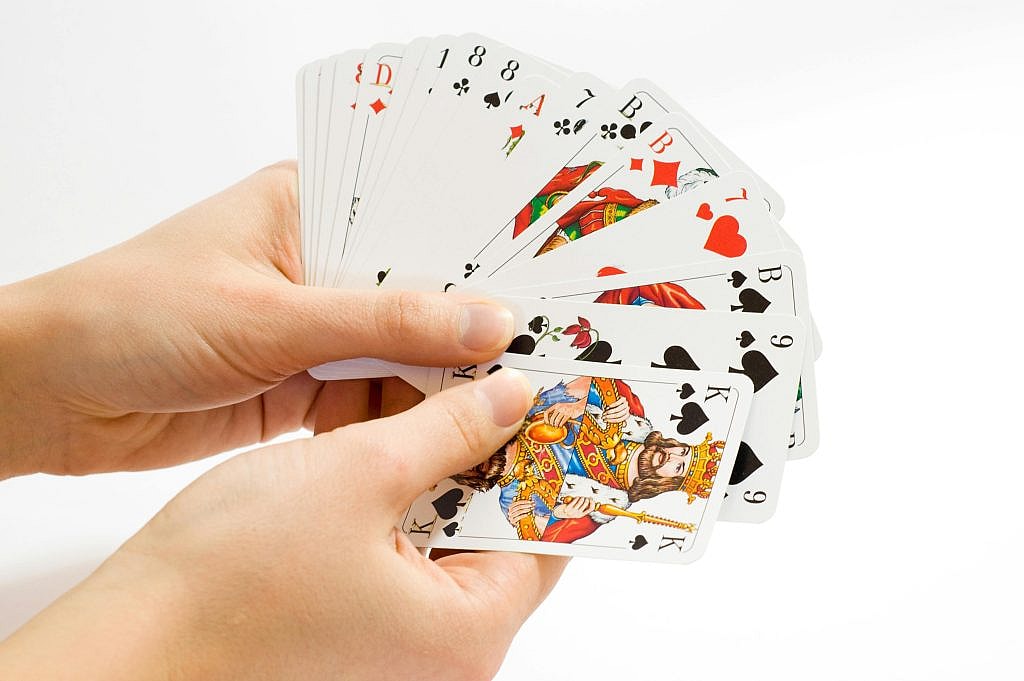
Setup
- Shuffle the deck thoroughly.
- Deal the cards evenly to all players. It’s okay if some players have one more card than others.
- Determine the first player. Traditionally, the player with the Ace of Spades goes first, or you can decide randomly.
Gameplay
1. First Turn
The starting player lays down one to four Aces face-down and declares what they’re playing, for example:
“Two Aces.”
2. Turn Order
Play moves clockwise. Each player must play cards of the next rank in ascending order and announce their play. For example, if Aces were just played, the next player must play Twos.
The rank sequence goes:
Ace → 2 → 3 → 4 → 5 → 6 → 7 → 8 → 9 → 10 → Jack → Queen → King → back to Ace
3. Bluffing
If you don’t have the required rank, you’re allowed to lie. Place any card(s) face-down and announce that they’re the right rank.
Example:
It’s your turn to play Eights, but you don’t have any. You could play two random cards and say, “Two Eights.”
Calling Bullshit
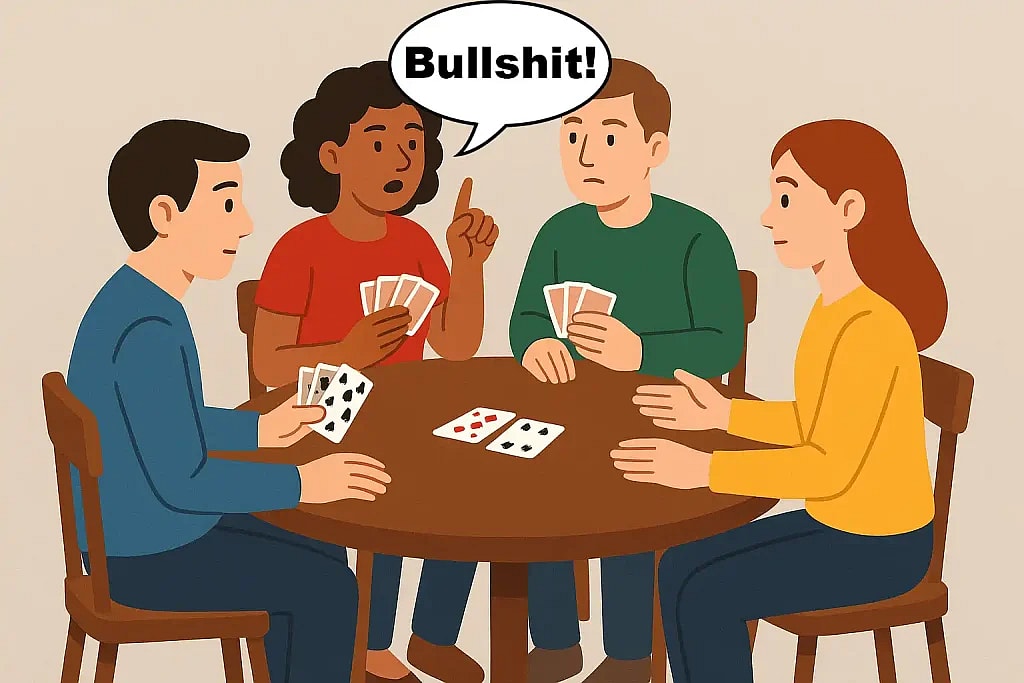
Any player can challenge a turn immediately after the cards are placed by calling “Bullshit.”
- If the challenged cards are not the claimed rank: The player who lied must pick up the entire discard pile.
- If the challenged cards are the claimed rank: The challenger must take the discard pile.
You cannot challenge your own play.
Bullshit Card Game Strategy
Here are some strategies to improve your chances of winning:
- Tell the Truth Often: If you always bluff, people will start calling you out. Mix honesty with lies to stay unpredictable.
- Act Unsure: Pretend you’re nervous or unsure, even when telling the truth. This might bait opponents into calling “Bullshit” on honest plays.
- Track Cards: Pay attention to what cards have already been claimed. If all four Jacks have supposedly been played, the fifth “Jack” should raise red flags.
- Organize Your Hand: Group cards in a way that supports your bluffing plan. Keep commonly claimed cards ready for moments when you’re forced to lie.
- Call Bullshit at the Right Time: When a player is down to their last card, and they claim to have the exact rank required, that’s often a good time to call.
Winning the Game
The first player to get rid of all their cards wins. However, if a player gets challenged on their final turn and is caught lying, they must pick up the pile and keep playing.
Game Variants
Want to change it up? Here are some common rule variations:
Double Decks
Add a second deck when playing with 7 or more people to make sure there are enough cards.
Reverse Play
Play in descending rank order instead of ascending:
King → Queen → Jack → … → 2 → Ace
Flexible Rank
Let players play either one rank higher or lower than the previous play (e.g., 7 or 9 after an 8).
No Turn Order
In this speed variant, there is no turn order. Anyone can play at any time with the next correct rank.
Repeat Ranks Allowed
Allow the same rank to be played multiple times in a row instead of moving to the next one.
Drinking Game Version
Turn the Bullshit card game into a party game by adding a simple rule:
- Whoever picks up the discard pile must take a drink.
This variation is best for adults and works great at casual gatherings.

BS Card Game FAQs
You can bluff and play something else, but be careful not to get caught.
Yes, you can play between one and four cards on your turn.
Yes, but the first one to call it gets to challenge the play.
Once the next player has taken their turn, the previous play can no longer be challenged.
You then have to pick up the entire discard pile.
You deal the entire deck (52-cards, no jokers).
To be the first to get rid of all the cards in their hand.
Yes, Cheat is just another name for BS.
Final Thoughts
The Bullshit card game is easy to learn, fun to play, and ideal for groups of all sizes. It rewards players who can lie convincingly and think quickly. Whether you’re playing casually with friends or trying to outwit seasoned bluffers, Bullshit is a classic game of deception that never gets old.
If you enjoy bluffing games like Coup or Liar’s Dice, Bullshit will fit right into your rotation.
And yes, we are aware how funny some of the section titles sound 🙂
Browse Related Games!
 Official Casting Shadows Rules
 Official Twenty-Nine Rules
 Official Coup Rules
 Official The Fox in The Forest Rules
 Official Command of Nature Rules
 Official Canasta Rules
 Official 2-7 Triple Draw Poker Rules
 Official Sheepshead Rules
Official Panguingue (Pan) Rules
Official Sheepshead Rules
Official Panguingue (Pan) Rules
 Official Diminishing Contract Whist Rules
Official Canadian Salad Rules
Official Diminishing Contract Whist Rules
Official Canadian Salad Rules
 Official Crazy Rummy Rules
can player ask other player have a card to count all to together for example what if someone puts down a fake one five but then another player ask if anybody else has the same number so then would that ruin the game since no one will call if they don’t have the same card and they will call it when everybody else has the same card
Hey Taylor. Technically no, players normally should not ask others if they have the same card in Bullshit/BS. That gives away information and ruins the bluffing part of the game. Players are supposed to decide whether to call “Bullshit” based on memory, guessing, and behavior, not by asking others what cards they have.