

Last Updated on March 1, 2026 by The Official Game Rules Team
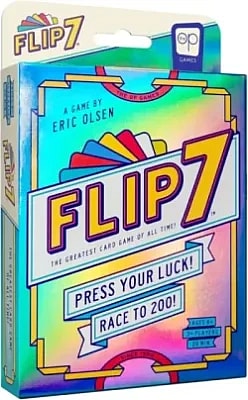
Flip 7 is a fast-paced press-your-luck card game designed for groups of all sizes. Players take turns flipping numbered cards, aiming to build the highest-scoring line without busting. With a unique pyramid-style deck and powerful action cards, every round is full of tension and excitement. This page explains the complete rules for how to play Flip 7, including setup, gameplay, card effects, scoring, and end-of-game conditions.
This post contains affiliate links. For more information, see our disclosures here.
How to Play Flip 7
Objective of the Game
Flip 7 is a push-your-luck party card game where players take turns drawing cards from a central deck, trying to collect the highest possible score each round without going bust. The main objective is to be the first player to reach 200 points across multiple rounds.
Players earn points by collecting Number cards during their turn. You can stop your turn at any time and keep your accumulated cards and points, or you can keep drawing to try to earn more. However, if you draw a Number card that matches one you already have, you bust and score zero for that round.
There’s also a special bonus: if you successfully collect 7 unique Number cards during your turn, you instantly end the round and earn an additional 15-point bonus, regardless of what other players have.
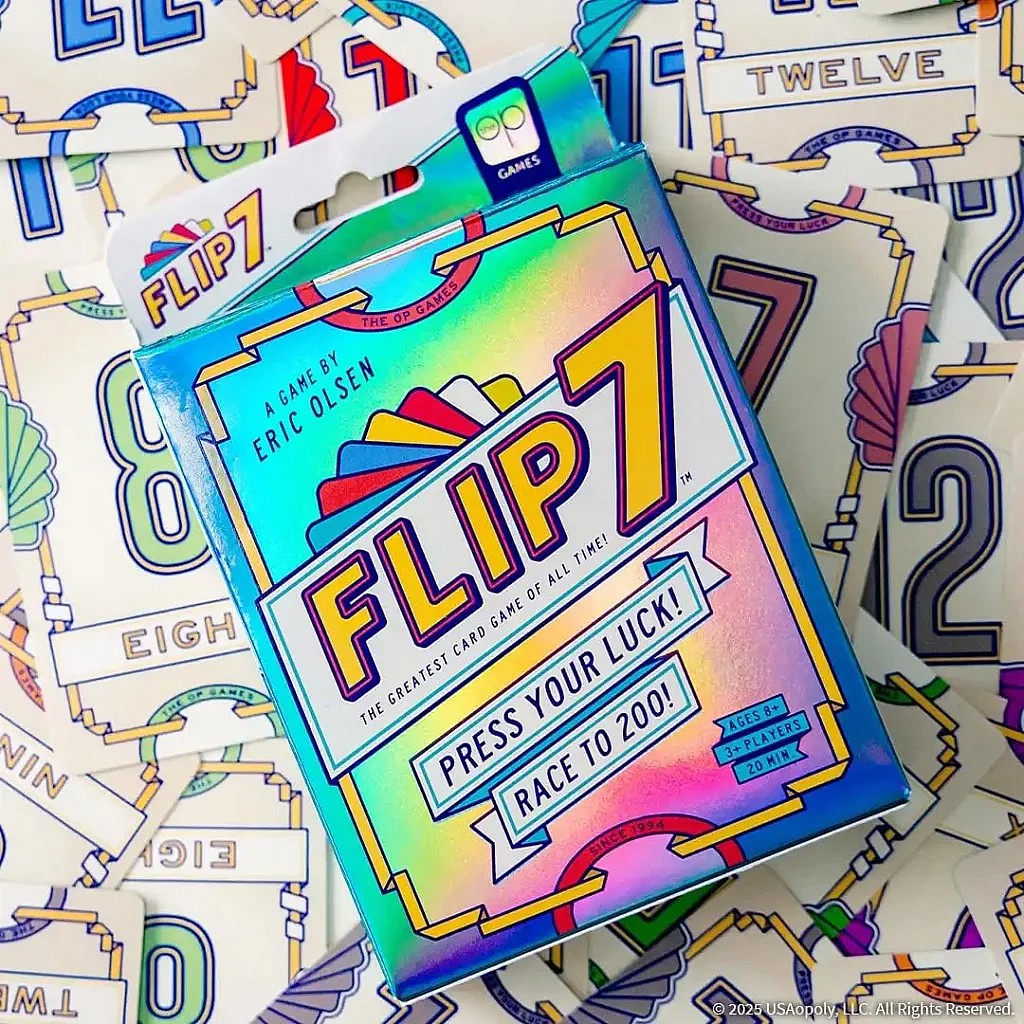
Ages 8+ | 3+ Players | 20 min

Components
The Flip 7 deck contains 94 cards. Here’s how they break down:
Number Cards (81 total):
Each Number card is worth its face value in points. The higher the number, the more of that card exist in the deck.
- 12 cards showing the number 12
- 11 cards showing the number 11
- … continuing downward …
- 2 cards showing the number 2
- 1 card showing the number 1
- 1 card showing the number 0 (worth zero points but counts toward 7 unique numbers)
This distribution means high numbers are more likely to appear, while low numbers are rare and risky to chase.
Modifier Cards:
- +2, +3, +4, …, up to +10: Adds that number of points to your total for the round
- x2: Doubles your current score before applying other modifiers
Modifier cards are not Number cards and do not count toward the 7-unique-card bonus.
Action Cards:
- Freeze!
- Flip Three!
- Second Chance
These cards interrupt the normal flow of the game and introduce tactical decisions and surprise outcomes.
Note: If playing with more than 18 players, consider adding a second deck to ensure enough cards are available.
Setup
- Shuffle all 94 cards thoroughly to form a central draw pile.
- Choose one player to be the Dealer. This role rotates clockwise after each round.
- Make sure you have a way to track scores: use a notepad, dry-erase board, or download the printable scoresheet from the QR code provided in the rules.
You’re now ready to begin play.
Dealing the Cards
At the start of each round:
- The Dealer deals one card at a time to each player, including themselves.
- If a player is dealt an Action card, resolve its effect immediately before continuing to deal the next card.
- Continue dealing until every player has received at least one card.
Due to the nature of Action cards, it’s possible that some players may receive multiple cards or none during the initial deal.
Player Turns
Starting with the player to the Dealer’s left and proceeding clockwise, each active player (i.e., a player who hasn’t busted or stayed) takes their turn.
Each turn, a player chooses between two actions:
1. Hit (Draw a Card)
- Draw one card at a time from the deck.
- Place any Number cards in a row in front of you. These are your scoring cards for the round.
- Place Modifier cards above your row. They do not count toward the 7 unique Number cards.
- Action cards are resolved immediately.
You may continue drawing as long as you want, but beware:
- If you draw a Number card that matches a number already in your line, you bust and your turn ends. You score zero points for the round.
- If you successfully collect 7 unique Number cards, you end the round immediately and receive a 15-point bonus in addition to the total value of your cards and modifiers.
2. Stay (End Your Turn)
- You may choose to end your turn voluntarily before drawing.
- You keep all your cards and score the total value of your Number cards and any applicable Modifier cards.
- Once you stay, you are out of the round and cannot draw or be targeted by Action cards.
Special Cards: Actions
Freeze!
- Target any active player (including yourself if you’re the only one left).
- That player must immediately end their turn. They keep any cards collected so far and score as if they had chosen to Stay.
Flip Three!
- Target an active player.
- That player must immediately draw the next three cards, resolving them one at a time.
- Number cards go into their row as usual.
- Modifier cards are placed above the row.
- Action cards (like Second Chance) are set aside to be used later.
- If the player busts during these three cards, their turn ends and they score zero.
- If the player reaches 7 unique Number cards during this forced flip, the round ends immediately and the bonus is awarded.
- If another Action card like Flip Three or Freeze is revealed during the process, it is not resolved immediately—wait until the 3-card sequence is completed.
Second Chance
- This card protects the player from busting once.
- If you draw a Number card that duplicates one already in your line:
- Discard the duplicate and the Second Chance card.
- Continue your turn as normal.
- You may only hold one Second Chance card at a time.
- If dealt a second copy, give it to any active player who doesn’t already have one. If no eligible players exist, discard the extra card.
- All unused Second Chance cards are discarded at the end of the round.
Modifier Cards
Modifier cards affect scoring but do not help you reach the 7-card bonus and do not cause you to bust.
+2 through +10
- Simply add this number to your score after calculating your Number card total.
x2 Card
- Doubles the sum of your Number cards only, before adding +X modifiers.
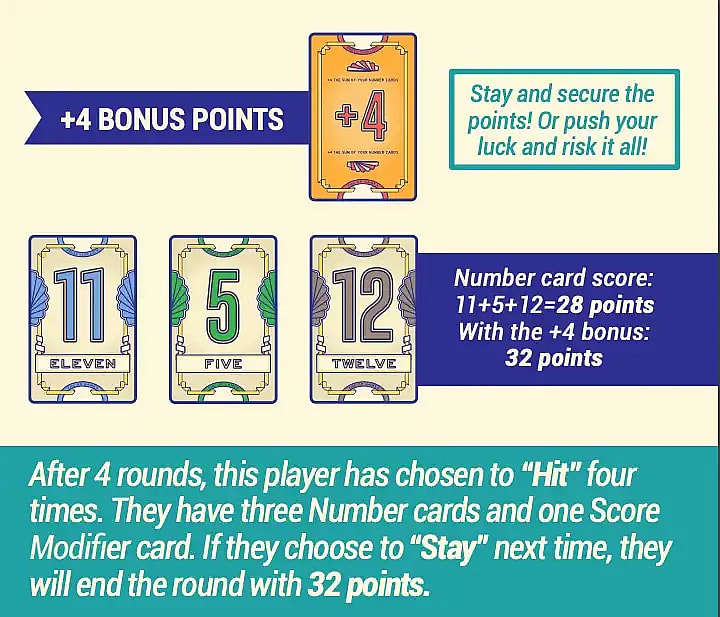
Scoring with modifiers example:
- Number cards: 8 + 6 + 3 = 17
- x2 card: 17 × 2 = 34
- +4 card: 34 + 4 = 38 points
End of Round
A round ends immediately if any of the following occurs:
- A player successfully collects 7 unique Number cards
→ That player ends the round instantly and earns a 15-point bonus - All players have either busted or chosen to Stay
→ No more actions can be taken; scoring phase begins
Scoring
- If you busted, you score zero points.
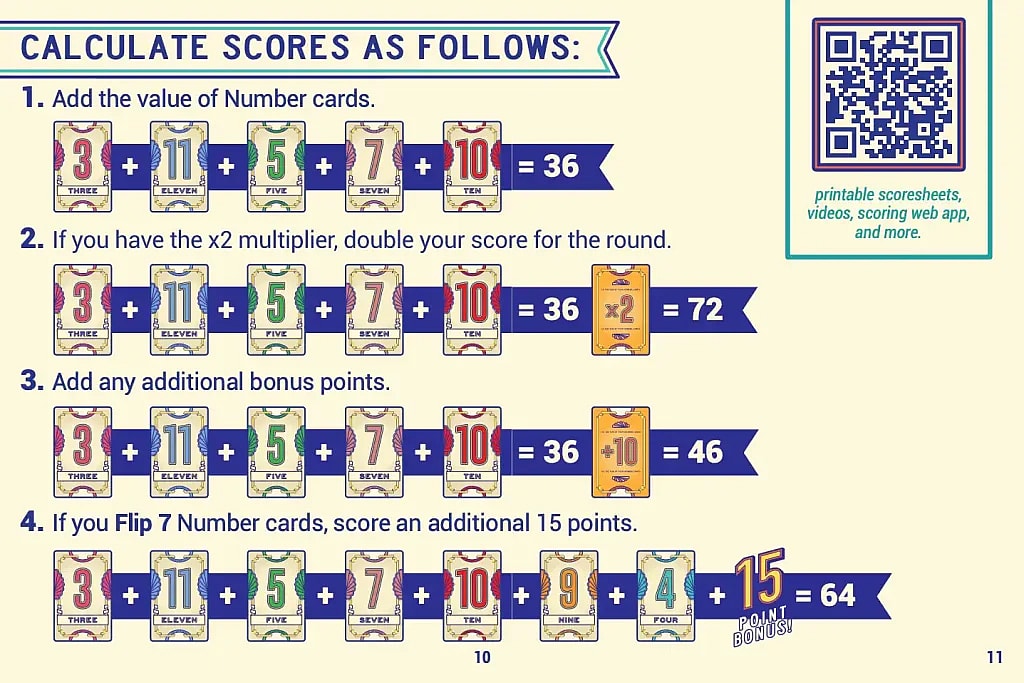
- If you stayed or were forced to Freeze, score the total value of your Number cards and add any Modifier cards (x2 first, then +X).
- If you flipped 7 unique Number cards, add the 15-point bonus to your total for the round.
- Unused Second Chance cards are discarded.
Use your score sheet to track each player’s cumulative score.
End of Game
- The game ends when at least one player’s total score reaches 200 or more points at the end of a round.
- Ties can be broken with a sudden-death tiebreaker round.
- If multiple players cross 200 in the same round, the player with the highest total score wins.
Flip 7 FAQ
An active player is someone who has not busted and has not chosen to stay or freeze. Once you stay/freeze, you are no longer considered active and cannot be targeted by cards such as Flip Three.
No. Once a player has stayed or frozen, they are out of active play. Action cards that affect “active players” only apply to those still taking turns.
If multiple players stay in the same round, they simply stop drawing and await the outcome. They are safe from action cards that require an active target.
Yes. A player must clearly declare when they are staying or freezing. This prevents confusion and makes it clear that they are no longer active.
If you bust, your turn ends immediately and your cards are discarded, even if you just flipped. You are no longer active and cannot be affected by cards like Flip Three.
Yes, but only if the rules or a specific card effect allows it. Otherwise, each player typically resolves only one action per turn.
The winner is the first player to reach the agreed-upon score (usually 200 points), or the player with the highest score when the game ends.
Video Tutorial
Browse Related Games!
 Official Casting Shadows Rules
 Official Twenty-Nine Rules
 Official Coup Rules
 Official Command of Nature Rules
Official Panguingue (Pan) Rules
Official Command of Nature Rules
Official Panguingue (Pan) Rules
 Official Forest Shuffle Rules
 Official The Fox in The Forest Rules
 Official Canasta Rules
 Official Lost Cities Rules
 Official Paco Rules
 Official Countries of the World: Guess in 10 Rules
 Official Crazy Rummy Rules