

Last Updated on February 10, 2026 by The Official Game Rules Team
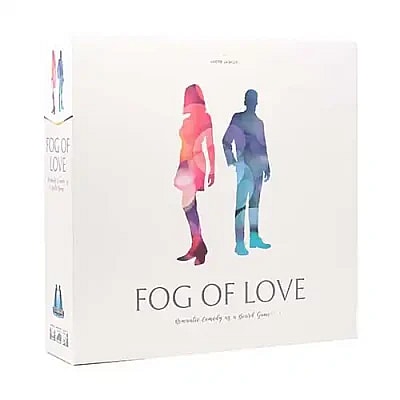
Fog of Love is a two-player board game that plays like a romantic comedy. Each player creates and controls a fictional character, guiding them through a relationship filled with affection, conflict, compromise, and surprise. Over the course of the game, you’ll face meaningful choices that shape both your character’s happiness and the fate of the relationship. By the finale, the story may end in true love, quiet dissatisfaction, or a dramatic breakup.
This post contains affiliate links. For more information, see our disclosures here.
How to Play Fog of Love
Game Overview
Fog of Love is played through a sequence of scenes organized into chapters, forming a complete narrative arc. During the game, players will:
- Make choices that affect satisfaction
- Accumulate personality tokens that define behavior
- Fulfill or fail trait goals
- Secretly manage and discard destinies
- React to scenes, secrets, and dramatic twists
The goal is not simply to “win,” but to fulfill a final destiny chosen at the end of the game. Some destinies require cooperation, others selfishness, and some lead to inevitable breakups.
Components
Boards and Player Items
- 1 Game board
- 2 dual-sided character cards
- 2 card holders (pink and blue)
- 2 player aids
- 2 token boxes
- 18 card dividers
- Custom insert
Cards
- Love Stories (each includes synopsis, chapters, finale, and scenes)
- Scenes (Sweet, Serious, Drama)
- Traits
- Features
- Occupations
- Destinies
- Tutorial cards
Tokens
- 8 choice tokens (A–D)
- 70 personality tokens (35 per color)
- 10 personality tokens worth 5
- Satisfaction tracking tokens
Setup
- Place the game board between the players, with pink on one side and blue on the other.
- Each player takes:
- Their card holder
- Their choice tokens
- Their token box
- Choose a Love Story.
- For first games, Sunday Morning Date is recommended.
- Read the synopsis and place it overview-side up on the board.
- Place any special events listed in the synopsis beneath it.
- Stack chapters and finale face down in order, with chapter one on top.
- Sort scenes into Sweet, Serious, and Drama decks.
- Include any linked scenes related to special events.
- Shuffle and place the decks on the board.
- Shuffle and place trait, feature, and occupation decks.
- Each player receives the destinies specified by the Love Story.
- The player who last blew a kiss becomes the first player.

The Right Mindset
Fog of Love is a narrative game. Players are encouraged to roleplay, imagine scenes, and create dialogue. Some cards ask players to tell short stories or explain motivations. These prompts can be skipped if needed, but leaning into them improves the experience.
You are playing characters, not yourselves. Characters may behave inconsistently, change personalities, or make bad decisions. The story matters more than success.
Core Concepts
Satisfaction
Satisfaction represents how happy your character is in the relationship.
- Tracked on your character card
- Gained or lost through scene effects and fulfilled trait goals
- Cannot go below zero
- Every 10 satisfaction loops the track and places a marker
Higher satisfaction makes fulfilling destinies easier, but some destinies ignore personal happiness entirely.
Personality Tokens
Personality tokens represent how your character behaves across six personality dimensions.
Each dimension has:
- An up aspect
- A down aspect
Choices award tokens to one aspect or the other. Tokens are never removed unless a card explicitly says so. It is common to have tokens on both sides of a dimension.
Traits and Trait Goals
Traits represent inherent personality tendencies.
- Each trait has a trait goal
- Trait goals are fulfilled by achieving a balance of personality tokens
- Balance is calculated as the difference between up and down aspects
Example:
If a trait requires +3 on an aspect, you must have at least three more tokens on that aspect than on its opposite.
Shared Trait Goals
Some traits are shared:
- Use the combined balance of both players’ tokens
- Cooperation becomes essential
- If multiple traits share the same aspect:
- Second trait doubles the requirement
- Third triples it
At game end, players decide which shared trait is evaluated first.
Destinies
Destinies define what your character ultimately wants.
- All destinies are kept secret
- Players begin with the same set
- Cards may cause you to discard, retrieve, swap in, or swap out destinies
- You must always keep at least two destinies in hand
Destinies may:
- Require satisfaction
- Require specific personality balances
- Require the partner to stay or leave
- Result in a breakup
At the finale, you select one final destiny.
Creating Your Characters
- Choose your character’s gender by flipping the card.
- Deal 5 traits, secretly keep 3.
- Deal 3 occupations, choose 1, reveal it.
- Deal 5 features.
- Players alternate assigning 3 features to their partner.
- Describe why your character noticed this feature.
- Gain personality tokens from features and occupation.
- Name your character.
- Introduce your character briefly.
- Each player draws 5 scenes as a starting hand.
Gameplay Structure
Turn Sequence
On your turn:
- Discard any number of minor scenes and redraw.
- Play one scene and resolve it.
- Draw back up to 5 scenes.
- Check whether the chapter ends.
Players alternate turns.
Sharing Information
You May NOT
- Reveal scenes in hand
- Reveal destinies
- Reveal traits or trait goals
- Reveal secrets
- Discuss optimal choices
You MAY
- Roleplay characters
- Express satisfaction or frustration
- Talk generally about relationship direction
- Bluff or mislead
Chapters
Chapters define story structure and deck access.
- Early chapters are sweet
- Middle chapters are serious
- Final chapters are dramatic
Each chapter:
- Is read aloud
- Specifies which decks may be drawn from
- Sets a scene limit
When the limit is reached:
- Discard all played scenes
- Reveal the next chapter
Scene Types and Resolution
Partner Chooses
- The non-playing player chooses
- That player receives personality tokens
Both Choose
- Both players secretly choose A–D
- Reveal simultaneously
- Resolve personality tokens
- Resolve choice effects
- Resolve additional match effects
Situations
- Affect the next scene only
- Do not stack
- Never affect chapters or finales
Secrets
- Played face down
- Do not count toward chapter length
- Revealed by cards or at the finale
- Grant effects depending on reveal timing
Minor Scenes
- Do not count toward chapter length
- Discarded immediately
- Can be cycled freely at turn start
Reactions
- Played immediately in response to scenes
- Do not consume a turn
- Always replaced with a new draw
- Are minor scenes
Special Effect Scenes
- Unique effects explained on the card
- Always override general rules
Special Events and Linked Scenes
- Placed under the synopsis
- Enter decks when instructed
- Linked scenes must be included when the event is used
- Can be reused across Love Stories
Playing with Destinies
Destiny effects include:
- Swap In
- Swap Out
- Discard
- Retrieve
Ignore effects that reference destinies not used in the current Love Story.
The Finale
At the finale:
- Select a final destiny
- Score trait goals
- Resolve secrets
- Apply destiny conditions
- Determine relationship outcome
Endings may:
- Succeed for both
- Succeed for one
- Fail for both
Gender-Dependent Scenes
Some scenes require specific gender combinations.
- If illegal, discard and redraw
- Optional customization allows ignoring restrictions
- Adoption rules may replace pregnancy where desired
Strategy Guide
- Delay committing to a destiny
- Watch personality token patterns
- Shared traits demand cooperation
- Low satisfaction can still win
- Destinies shape how selfish you should be
Tips for New Players
- Roleplay improves clarity
- Secrets are powerful leverage
- Losing can still tell a great story
- Mismatched choices are not mistakes
- Let characters evolve naturally
Video Tutorial
Conclusion
Fog of Love is a narrative experience first and a game second. Winning matters less than the story created. Whether the relationship ends in devotion, resentment, or heartbreak, every playthrough offers a complete and memorable romantic arc.
FAQ
It depends on your “destiny”.
Yes.
Yes, with different choices and outcomes.
Yes, through change effects.
No. Some destinies reward breakups.
Browse Related Games!
 Official Don’t Get Stabbed! Rules
 Official Casting Shadows Rules
 Official Double Ditto Rules
 Official Lost Cities Rules
 Official Lowball Poker Rules
 Official Countries of the World: Guess in 10 Rules
 Official The Mind Rules
 Official Command of Nature Rules
 Official Tabletop Tiki Toss Rules
 Official Twenty-Nine Rules
Official Paco Rules
Official Twenty-Nine Rules
Official Paco Rules
 Official Aeon’s End Rules