

Last Updated on October 13, 2025 by The Official Game Rules Team
Rummikub is a classic tile-based game that combines luck, skill, and strategy. Whether you’re a casual player or an aspiring champion, mastering Rummikub requires more than just playing your tiles—you need a solid strategy to outmaneuver your opponents and maximize your points. In this guide, we’ll cover essential tips, advanced strategies, scoring techniques, and answer the most common questions about Rummikub.
How to Play Rummikub: Quick Overview
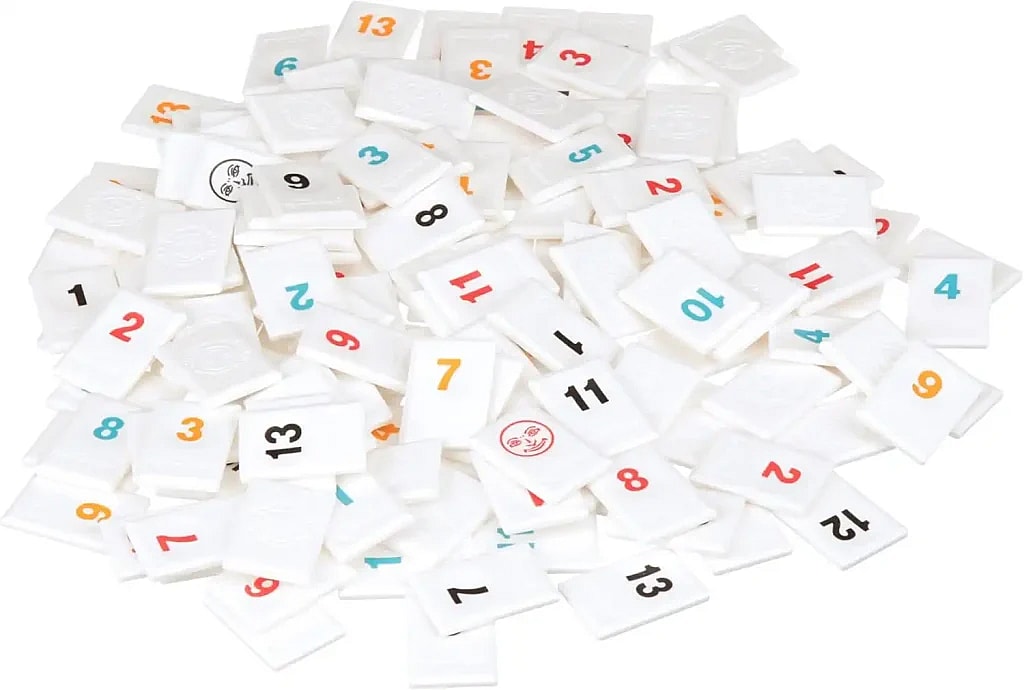
Rummikub is played with tiles numbered 1 to 13 in four colors (red, blue, yellow, black) and two jokers. The objective is to be the first to play all your tiles by forming sets and runs:
- Set: 3 or 4 tiles of the same number in different colors (e.g., 5-red, 5-blue, 5-yellow).
- Run: 3 or more consecutive numbers of the same color (e.g., 7-red, 8-red, 9-red).
Each player starts with 14 tiles, and the first meld must total at least 30 points using tiles from their rack. Players take turns adding tiles to the table or reorganizing existing melds.

Basic Rummikub Strategy
- Plan Your First Move Carefully
Your first meld must reach 30 points. Focus on combinations that use low-value tiles efficiently to unlock your rack without wasting your high tiles. - Keep Your Options Open
Avoid committing all your tiles to one sequence or set too early. Flexible tiles can be rearranged later for bigger plays. - Watch Your Opponents
Pay attention to the tiles your opponents play. If a player is holding onto high numbers or specific colors, anticipate their strategy to block them effectively. - Save Jokers Strategically
Jokers are powerful but risky. Use them to complete high-value runs or sets, or to disrupt an opponent’s layout—but avoid using them too early.
Advanced Rummikub Strategies
- Tile Rearrangement Mastery
Learn to manipulate the table by splitting runs and sets. For example, if a run is 4-5-6-7-red, you can place your 3-red at the start and rearrange the run as 3-4-5-6-7. - Delayed Play Tactic
Sometimes holding tiles back gives you leverage for larger combinations in future turns. Avoid “emptying” your rack prematurely. - Joker Substitution and Recycling
Replace a joker with the tile it represents to regain control of the joker. This can unlock complex sequences and surprise opponents. - Color and Number Tracking
Mentally track which colors and numbers have been played. This helps anticipate what tiles opponents might be waiting for, allowing strategic blocking.
Rummikub Scoring Diagram
| Tile Type | Points |
|---|---|
| Numbered Tile (1-13) | Face value |
| Joker | 30 points |
| Remaining Tiles in Rack (penalty) | Sum of tiles left at game end |
Example:
If you finish the game with 5 tiles left (7-red, 10-blue, 12-yellow, Joker, 3-black), your penalty points are 7 + 10 + 12 + 30 + 3 = 62 points.
Diagram Idea: A visual showing a player’s rack and an example of sets and runs on the table with arrows for potential rearrangements. (I can generate an image for this next.)
FAQs About Rummikub Strategy
Save jokers for critical plays that complete large runs or sets. Avoid using them in low-value moves early in the game.
Early in the game, play conservatively. Rearrange only when it provides a strategic advantage or helps reduce penalty points.
Track what tiles opponents are likely collecting. Avoid breaking up their potential runs unless it also benefits your sequence.
Very. Reaching 30 points efficiently unlocks your rack early while saving high-value tiles for later turns.
Yes—maximize points by emptying your rack first and forcing opponents to hold high-value tiles, increasing their penalties.
Conclusion: Elevate Your Rummikub Game
Winning at Rummikub is a balance of strategic planning, clever tile manipulation, and keen observation of opponents. By mastering advanced strategies such as tile rearrangement, joker management, and delayed play, you can consistently improve your game and dominate the table. Track played tiles, plan several moves ahead, and adapt as the game unfolds—your opponents won’t know what hit them.
You may also like
 The 10 Games AI Thinks You Should Try Next
 25 Awesome Easter Games for Adults (Yes, Some Involve Alcohol!)
 How to Win Trumps Card Game: Advanced Strategies and Tips
 The 50 Best Board Games (Of All-Time)
 The Ultimate Cribbage Strategy and Scoring Guide
 Gin Rummy Strategy: Expert Tips to Win Every Game