

Last Updated on May 5, 2026 by The Official Game Rules Team
Chess is one of the most respected and widely played strategy games in the world. From casual games at home to elite-level tournaments featuring top grandmasters, the game of chess has remained popular for centuries due to its depth, balance, and intellectual challenge.
At its core, chess is a battle between two players, each controlling an army of pieces with the objective of checkmating the opponent’s king. While the rules of chess are simple to learn, mastering them requires patience, foresight, and strategic thinking.
This complete guide will teach you how to play chess, explain all essential chess rules, and help you build a strong foundation for improving your game.

This post contains affiliate links. For more information, see our disclosures here.
Chess Rules: How to Play Chess (Beginner to Advanced Guide)
Table of Contents
- Setup
- Chess Notation
- Piece Placement
- How Each Piece Moves
- Capturing Pieces
- Special Chess Moves
- Check, Checkmate, and Stalemate
- Basic Chess Strategy
- Common Mistakes to Avoid
- Advanced Strategy: Complete, In-Depth Guide
Objective
The objective of chess is to checkmate the opponents king, while avoiding being checkmated by the opponent.
Chessboard Setup
Before learning how to play chess, it’s crucial to understand the correct setup of the board and pieces.
The Chessboard
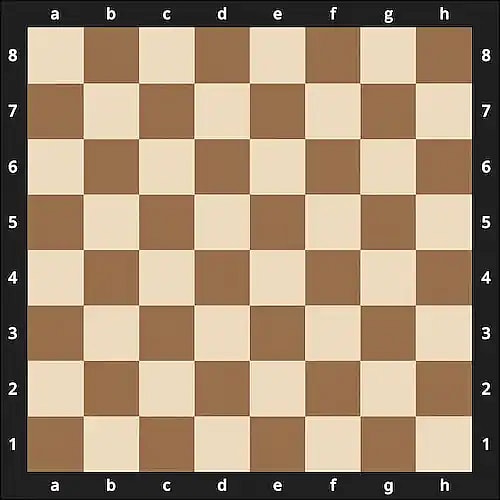
The chessboard consists of 64 squares arranged in an 8×8 grid, alternating between light and dark colors. The orientation of the board is important:
- Each player must have a light-colored square in the bottom-right corner
- This ensures correct placement of all pieces
Starting Pieces
Each player begins with 16 pieces:
- 1 King
- 1 Queen
- 2 Rooks
- 2 Knights
- 2 Bishops
- 8 Pawns
These pieces are divided between white pieces and black pieces.
Chess Notation Basics
Chess notation is used to record moves.
Example:
- e4 = pawn moves to e4
- Nf3 = knight moves to f3
Learning notation helps you study games and improve faster.
Piece Placement (Setup Rules)
Back Row (First Rank)
From left to right, the pieces are arranged as follows:
- Rook, Knight, Bishop, Queen, King, Bishop, Knight, Rook
Important placement rules:
Pawn Row
All pawns are placed directly in front of the back row:
- A white pawn starts on the second rank
- A black pawn starts on the seventh rank
Who Moves First?
In every standard chess game, the player controlling the white pieces makes the first move. Players then alternate turns, making one legal move at a time.
How to Play Chess: Basic Rules
To understand how to play chess, you must follow a few fundamental rules:
- Only one move can be made per turn
- You may only move your own pieces
- You cannot make a move that leaves your king in check
- The goal is to trap the opponent’s king in checkmate
How Each Chess Piece Moves
Each piece in chess moves in a unique way. Learning these movements is essential to playing correctly.
Pawns
Pawns are the most numerous pieces on the board but also the most limited in movement.
Movement Rules:
- Move forward one square
- On their first move, can move two squares
- Capture diagonally (one square forward-left or forward-right)
Important Notes:
- Pawns cannot move backward
- A white pawn moves upward; a black pawn moves downward
Pawn Promotion
When a pawn reaches the opposite end of the board:
- It must be promoted to another piece
- Options: Queen, Rook, Bishop, or Knight
Promotion can dramatically change the game by adding a powerful piece late in the game. Most players choose a queen because it is the most powerful piece.
Rooks
Rooks are powerful pieces that control long distances.
Movement:
- Move horizontally or vertically in straight lines
- Can move any number of squares
Rooks become especially strong in open positions and during the endgame.
Knights
Knights have the most unique movement pattern in chess.
Knight’s Move:
- Move in an “L” shape: two squares in one direction, then one square perpendicular
- Can jump over other pieces
This ability makes knights valuable in crowded positions.
Bishops
Bishops are long-range diagonal pieces.
Movement:
- Move diagonally across any number of squares
Each player has:
- One bishop on light squares
- One bishop on dark squares
Queens
The queen is the most powerful piece in chess.
Movement:
- Combines rook and bishop abilities
- Moves horizontally, vertically, or diagonally
The white queen and black queen often play a central role in attacks.
Kings
The king is the most important piece.
Movement:
- Moves one square in any direction
The entire game revolves around protecting your king while attacking the opponent’s king.
Capturing Pieces
To capture an opponent’s piece:
- Move your piece onto a square occupied by an opponent’s piece
- The opponent’s piece is removed from play
Important rules:
- You cannot capture your own pieces
- You cannot make a move that exposes your king to attack
Special Chess Moves
Castling
Castling is a unique move involving the king and a rook.
How It Works:
- The king moves two squares toward a rook
- The rook moves to the square next to the king
Conditions for Castling:
- Neither the king nor rook has moved
- No pieces are between them
- The king is not in check
- The king does not pass through attacked squares
Castling is essential for king safety and rook activation.
En Passant
En passant is a special pawn capture rule.
When It Applies:
- A pawn moves two squares forward from its starting position
- It lands next to an opponent’s pawn
Result:
- The opponent may capture it as if it moved only one square
- This must happen immediately or the opportunity is lost
Check, Checkmate, and Stalemate
Check
A king is in check when it is under attack.
The player must:
- Move the king
- Block the attack
- Capture the attacking piece
Ignoring check is not a legal move.
Checkmate
Checkmate is the goal of chess.
It occurs when:
- The king is in check
- There is no legal move to escape
The game ends immediately, and the player delivering checkmate wins.
Stalemate
A stalemate happens when:
- A player is not in check
- But has no legal moves available
This results in a draw.
Additional Draw Conditions
A chess game can also end in a draw under the following conditions:
- Threefold repetition (same position occurs three times)
- Fifty-move rule (no pawn movement or capture in 50 moves)
- Insufficient material (not enough pieces to checkmate)
- Mutual agreement between players
Chess Strategy: How to Play Better
Understanding chess rules is only the beginning. Strategy is what helps you win.
- Control the Center: The center squares (d4, d5, e4, e5) are critical because they allow your pieces to move freely.
- Develop Your Pieces: Bring out your knights and bishops early to control the board. Avoid moving the same piece multiple times in the opening unless necessary.
- Protect Your King: Castle early to safeguard your king and connect your rooks.
- Think Ahead: Good players always consider their opponent’s moves before making their own.
- Use Your Powerful Pieces Wisely: Don’t rely only on your queen. Coordinate all your pieces for maximum effectiveness.
Common Chess Tactics
Pin
A pin occurs when a piece cannot move without exposing a more valuable piece behind it.
Fork
A fork attacks multiple pieces at once, forcing difficult decisions.
Skewer
A skewer attacks a valuable piece, forcing it to move and exposing a weaker piece.
Discovered Attack
Moving one piece reveals an attack from another piece behind it.
Endgame Principles
The endgame is the final phase of the chess game.
Key Ideas:
- Activate your king
- Promote pawns
- Use rooks to control open files
Understanding basic endgames can dramatically improve your win rate.
Tips for New Chess Players
- Learn piece movement thoroughly
- Focus on simple strategies first
- Avoid unnecessary risks
- Practice regularly
- Study basic openings instead of memorizing advanced theory
Common Mistakes to Avoid
- Ignoring opponent’s threats: always consider if their move was a direct threat and if it was not, what kind of attack are they setting up for later
- Leaving pieces undefended: the more pieces cover each other, the better defense you have
- Moving too many pawns early: It’s important to develop major pieces alongside pawn advances
- Bringing the queen out too soon: without the right support from other pieces she becomes and easy target
- Forgetting king safety: castle early and often is a common chess phrase (especially for new players)
Advanced Chess Concepts Explained in Depth
Understanding these four ideas—tempo, piece coordination, space advantage, and initiative—will dramatically improve how you play once you already know the basic chess rules. These concepts are what separate casual players from stronger, more consistent competitors.
Tempo
Tempo in chess refers to gaining time by forcing your opponent to respond to your threats instead of executing their own plans. Every move in chess carries value, and when you make a move that demands an immediate response—such as attacking a piece or delivering check—you effectively “steal” a turn of progress.
For example, if you attack your opponent’s queen, they must move it instead of developing another piece. That gives you a free opportunity to improve your position while they react. Over several moves, these small time gains add up and can lead to a significant advantage.
Tempo is especially important in the opening phase of the chess game. Strong players avoid wasting moves (such as moving the same piece repeatedly without purpose) and instead focus on developing pieces efficiently while creating threats. Losing tempo, on the other hand, often results in falling behind in development, which can leave your king exposed and your position weak.
In simple terms: good players make moves that improve their position while forcing their opponent to lose time.
Piece Coordination
Piece coordination is about making sure all your pieces work together as a unified system rather than acting independently. In chess, even powerful pieces like queens or rooks are much less effective when they operate alone.
Strong coordination means your pieces:
- Defend each other
- Control key squares together
- Support attacking plans
For example, a rook on an open file becomes much stronger when supported by another rook or protected by pawns. Similarly, knights and bishops often work together to control central squares and create threats.
Poor coordination leads to scattered pieces that cannot support each other. This often results in blunders, where a piece is left undefended or an attack fails because it lacks backup.
One of the key goals in any game of chess is to improve your piece coordination over time, especially during the transition from opening to middlegame. Moves that connect your rooks, centralize your pieces, and align them toward a common target are all signs of strong coordination.
Space Advantage
Space advantage refers to controlling more squares on the chessboard than your opponent, especially in key central and forward areas. When you have more space, your pieces have greater mobility, while your opponent’s pieces become restricted.
This usually happens when:
- You advance pawns into the center or enemy territory
- Your pieces occupy active squares
- You limit your opponent’s movement options
For example, if your pawns control central squares like e4 and d4, your opponent’s pieces will struggle to enter those areas. This gives you more freedom to maneuver and build attacks.
However, space advantage must be handled carefully. Overextending (pushing too many pawns forward) can leave weaknesses behind your position. Skilled players know how to balance expansion with defense.
In practical terms:
- More space = more options for you
- Less space = fewer options for your opponent
This makes space one of the most important long-term advantages in chess.
Initiative
The initiative is the ability to dictate the pace of the game by continuously applying pressure and forcing your opponent into defensive moves. When you have the initiative, your opponent is reacting to your threats rather than creating their own.
This often occurs when:
- You launch an attack on the opponent’s king
- You create multiple threats at once
- Your moves force predictable responses
For example, if you repeatedly attack your opponent’s king or key pieces, they may be forced to defend for several consecutive moves. During this time, you control the flow of the game and can build a stronger position.
Maintaining the initiative is crucial in both attacking and dynamic positions. However, it can be lost if you make a passive move that allows your opponent to counterattack.
There’s a strong connection between initiative and tempo:
- Gaining tempo helps you take the initiative
- Maintaining the initiative helps you keep gaining tempo
At higher levels of play, entire games are often decided by which player controls the initiative for longer stretches.
Chess FAQ
To checkmate the opponent’s king.
A move that follows all rules and does not leave your king in check.
A special pawn capture that occurs after a two-square pawn move.
When a pawn reaches the opposite end and becomes a stronger piece.
Yes, through stalemate or resignation.
A draw where a player has no legal moves but is not in check.
Final Thoughts on Chess Rules
Chess is a timeless game that combines logic, creativity, and strategy. While the rules of chess are easy to understand, the depth of the game offers endless opportunities for improvement.
By learning how to play chess properly, practicing consistently, and studying strategy, you can develop your skills and enjoy the game at every level—from casual play to competitive tournaments.
good but add a paragraph for each heading explaining the concept of the header in more detail
Browse Related Games!
 Official Smart Ass Rules
 Official Mancala Rules
 Official Cubitos Rules
 Official Gaia Project Rules
 Official Crocodile Dentist Rules
 Official Machi Koro Rules
 Official Guess Who? Rules
 Official Rococo Rules
 Official The Lord of The Rings: Duel for Middle-Earth Rules
 Official Root Rules
 Official Memoir ’44 Rules
Official Quoridor Rules
Official Memoir ’44 Rules
Official Quoridor Rules